Gaze & Personal Space in Social VR
Eye-tracking behavioural indices of state paranoia in nonclinical participants
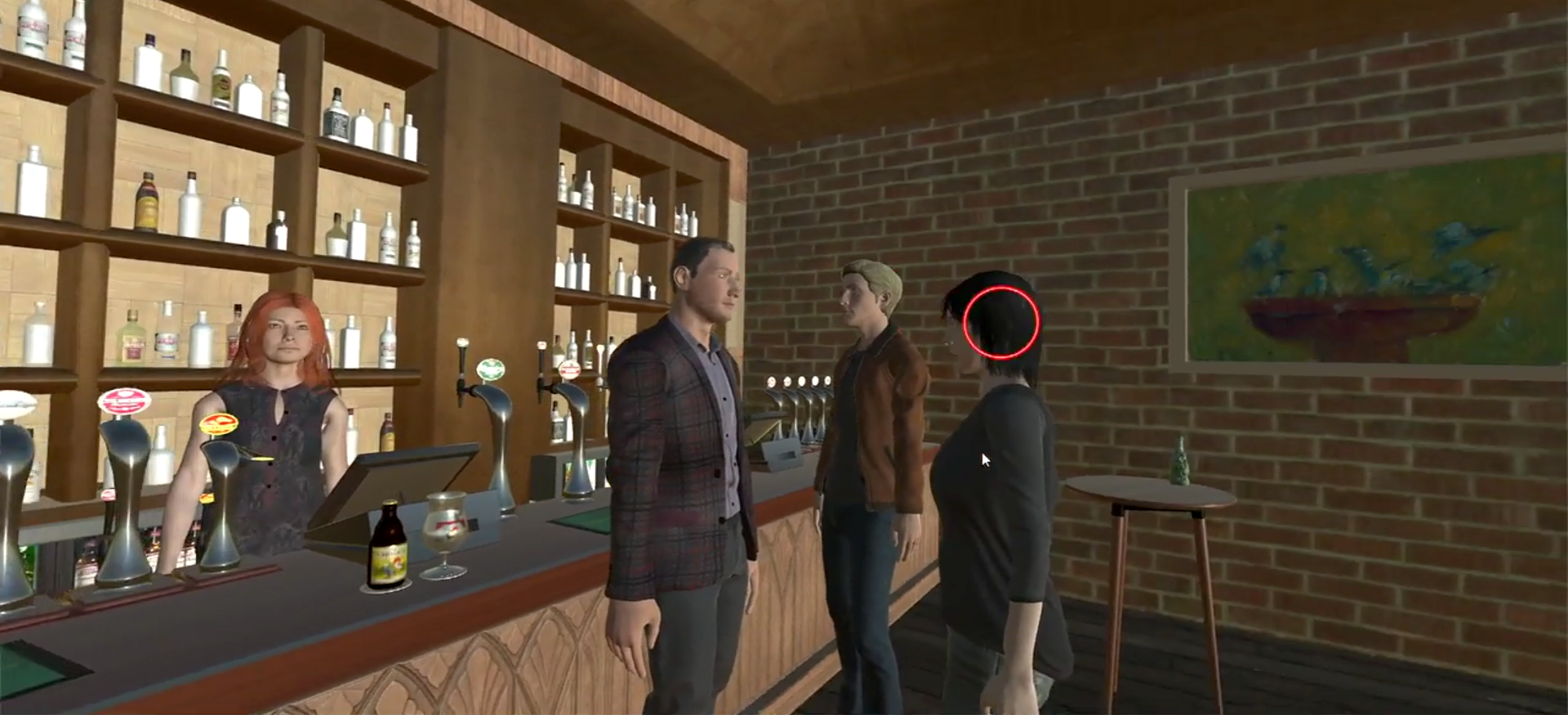
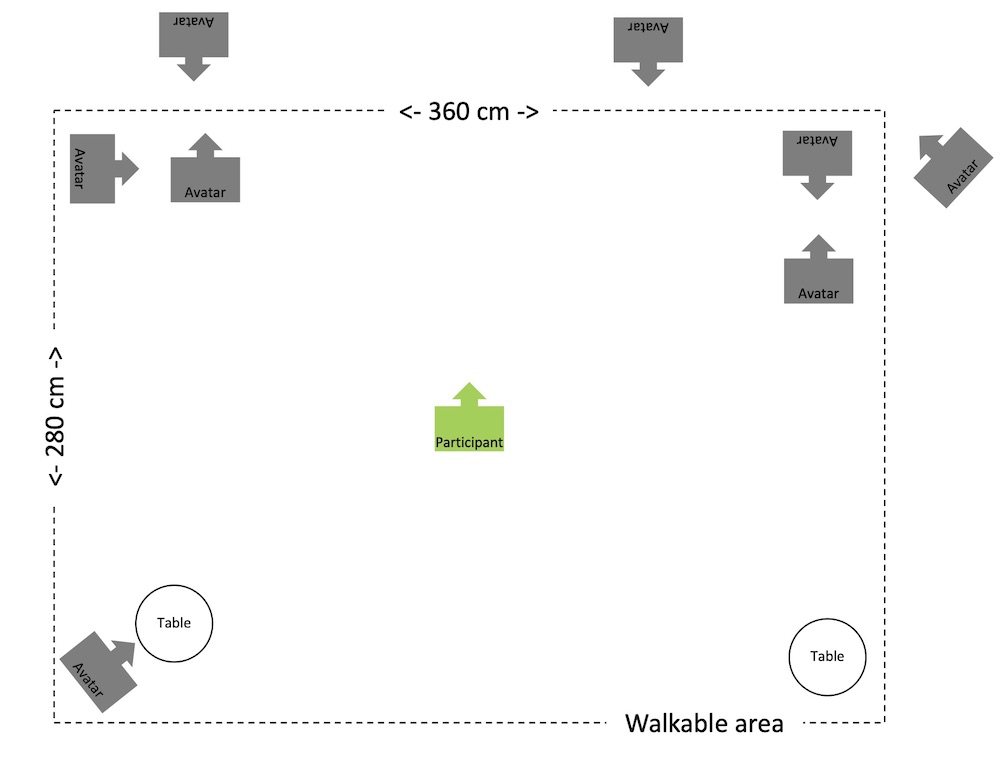
This pilot tested whether eye-tracking and interpersonal distance in social VR can serve as behavioural markers of state paranoia. Participants explored two bar environments in VR—one neutral, one moderately threat-inducing—while wearing a head-mounted display with integrated eye-tracking. Metrics included gaze allocation to human-like avatars (fixations, dwell time) and dynamic interpersonal distance, alongside self-reported paranoia.
Findings indicated no association between eye-tracking indices and self-reported paranoia; however, participants reporting higher state paranoia kept larger minimum distances from avatars. The study supports social VR as an ecologically valid context for probing social cognition and highlights personal-space behaviour as a promising marker. As part of the broader project, an online mindfulness intervention reduced state paranoia relative to a waitlist control, though changes in gaze/spacing measures were attributed to time rather than the intervention. Further work will refine VR tasks and sampling to test sensitivity and reliability.